Steamify ― Skins Cashout
Problem
Steam doesn't allow users directly withdraw money
From a business perspective, I truly understand Steam — they want to keep users’ money in their products. But we are on the users’ side of course…
The main goal was to build a seamless cashout experience that converts in-game assets into real money.
The core challenge was designing a high-conversion, mobile-first cashout flow for a young, price-sensitive audience in a highly competitive market. The process had to minimize drop-offs across multiple steps, build trust in financial transactions, and leverage Telegram integration as a long-term retention channel.
Research
There are at least three well-established services that are widely used within the gaming community. As a new product entering this market, we carefully analyzed their UX patterns, design decisions and feedback in their socials.
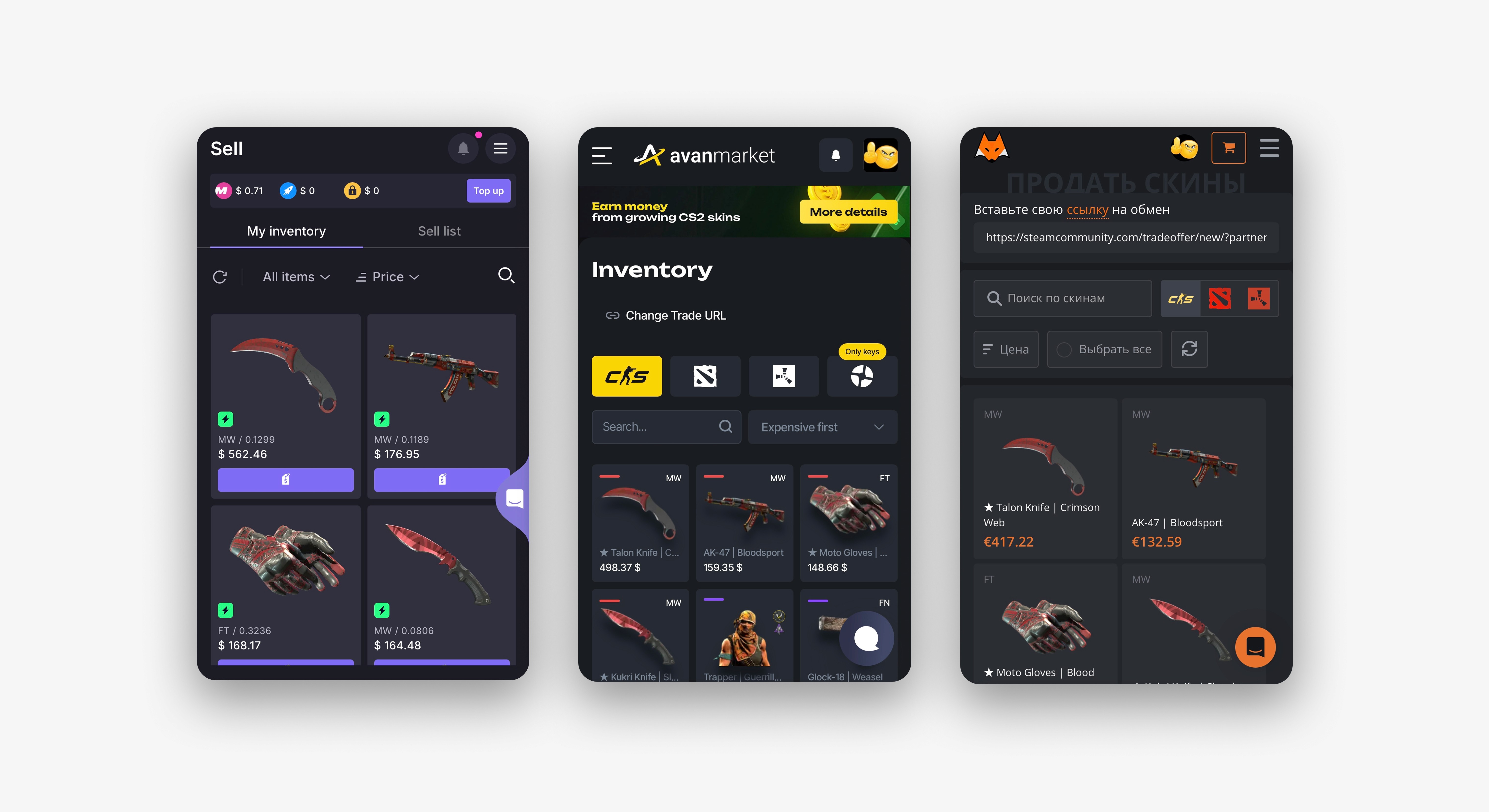
But how can we stand out?
Implement better UX;
Reward our users with cashback;
Give our users free skins;
Provide better prices for their skins.
Let us see your inventory!
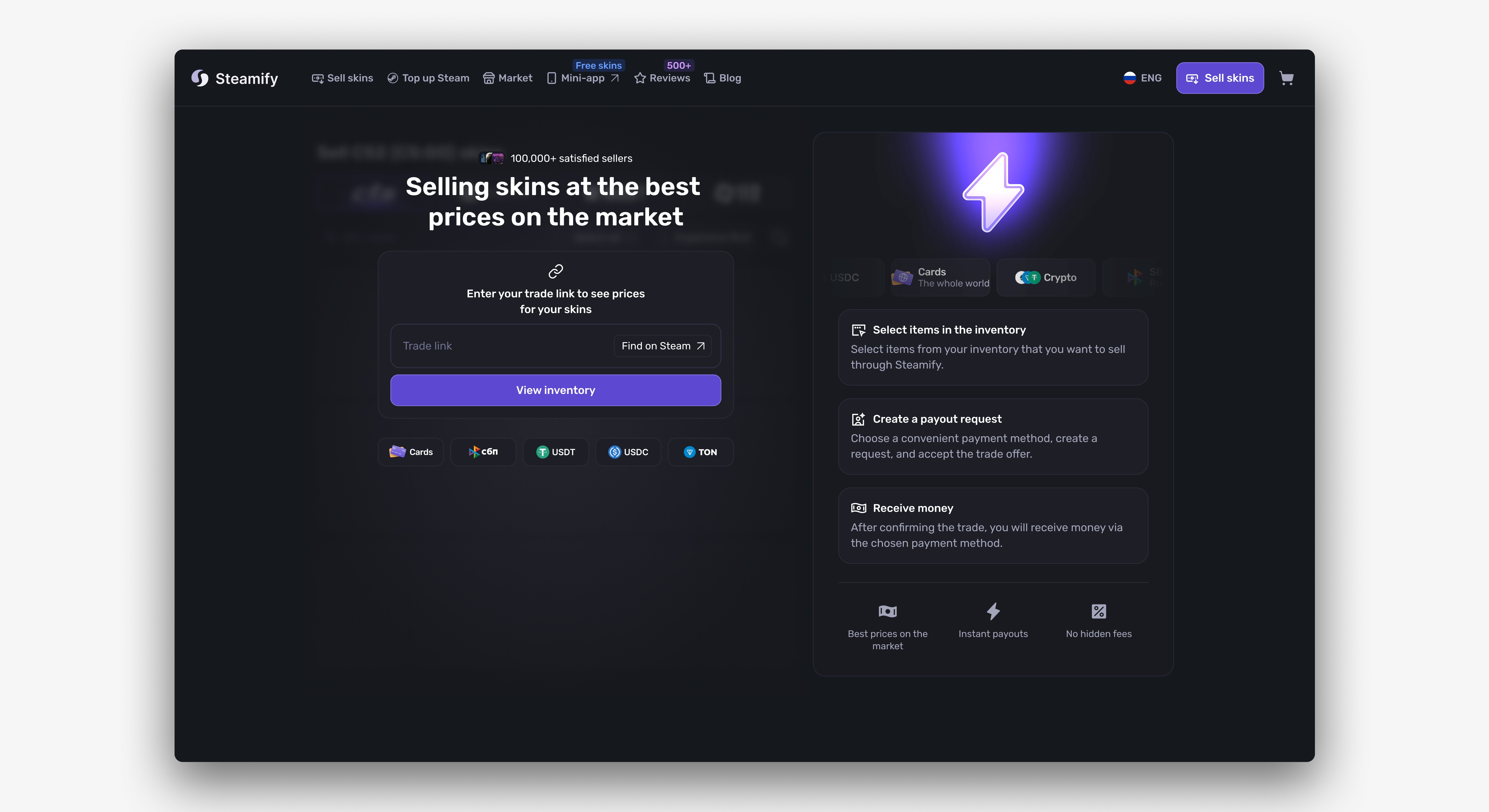
As soon as the user opens our service, they need to enter their Steam trade link so that we can parse their entire inventory and show it on the next step. Without this, it is impossible to continue using the service.
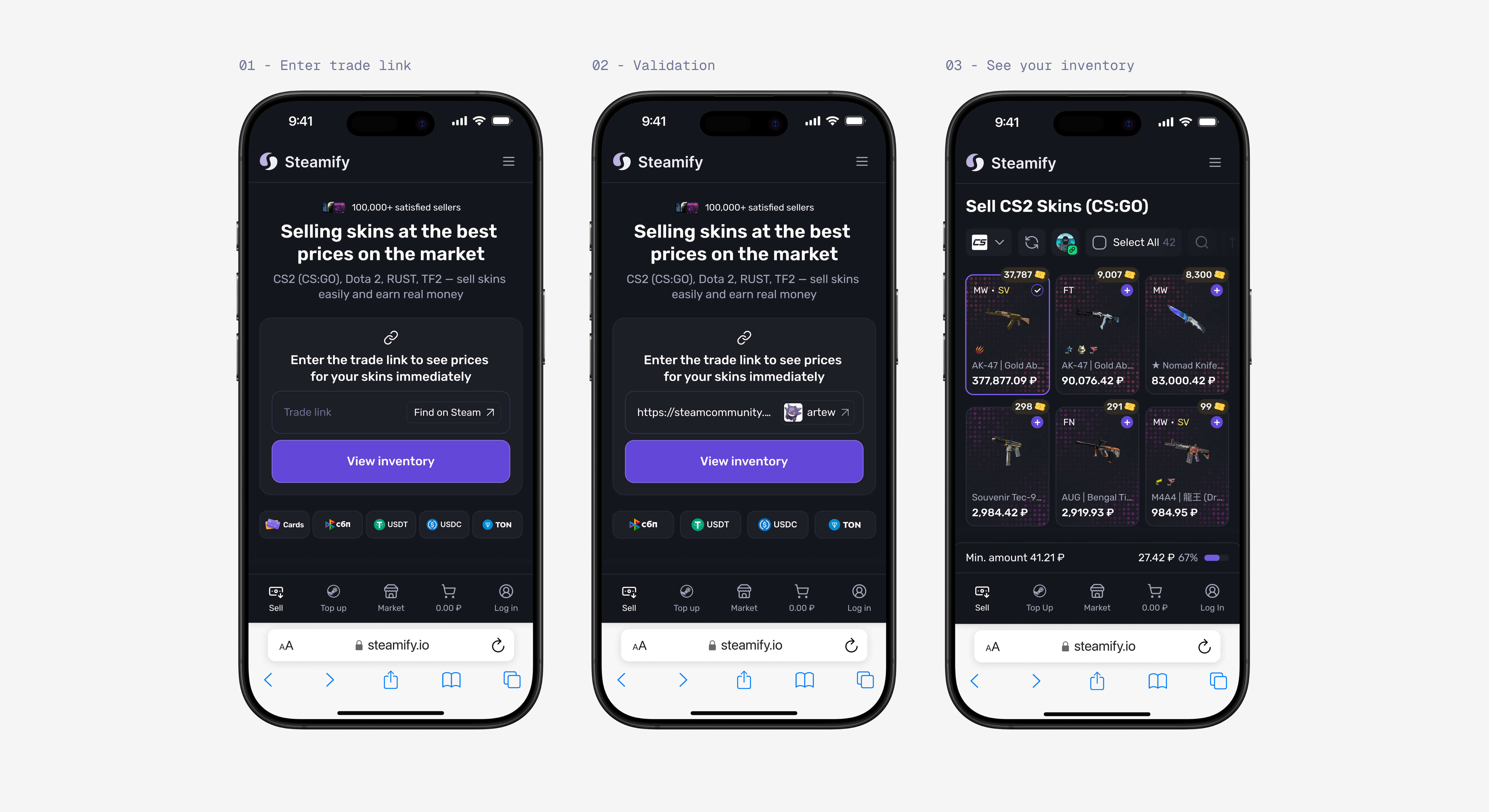
But what if the user’s inventory is private?
Users often had privacy settings enabled, which prevented our parsing and displaying their inventory when the user wanted to view it.
In this case, I created an explanatory modal window with video-instruction on how to change the privacy settings, since the Steam UX can be complex for some people and it's hard to find privacy settings inside of it.
Payment details
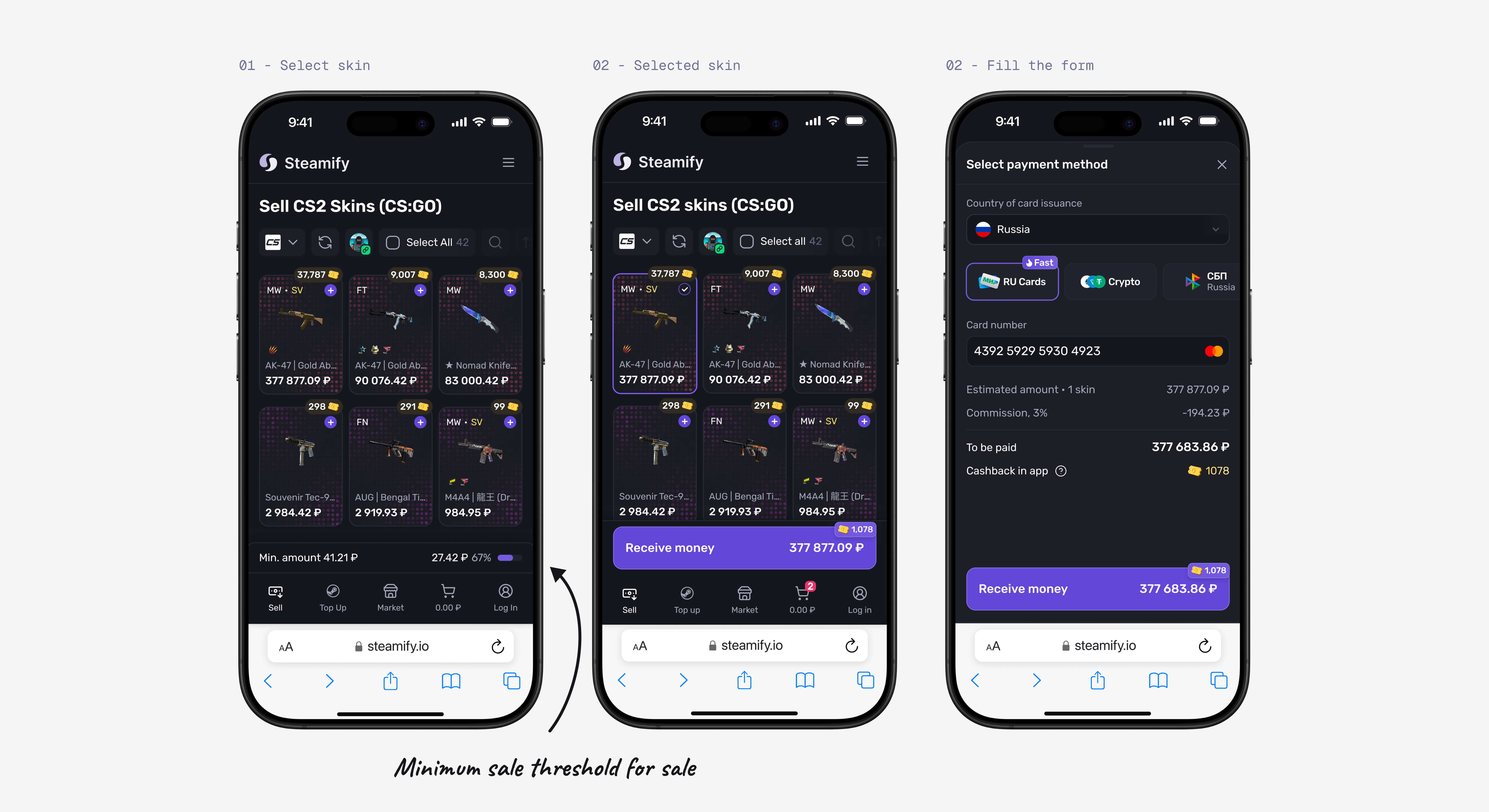
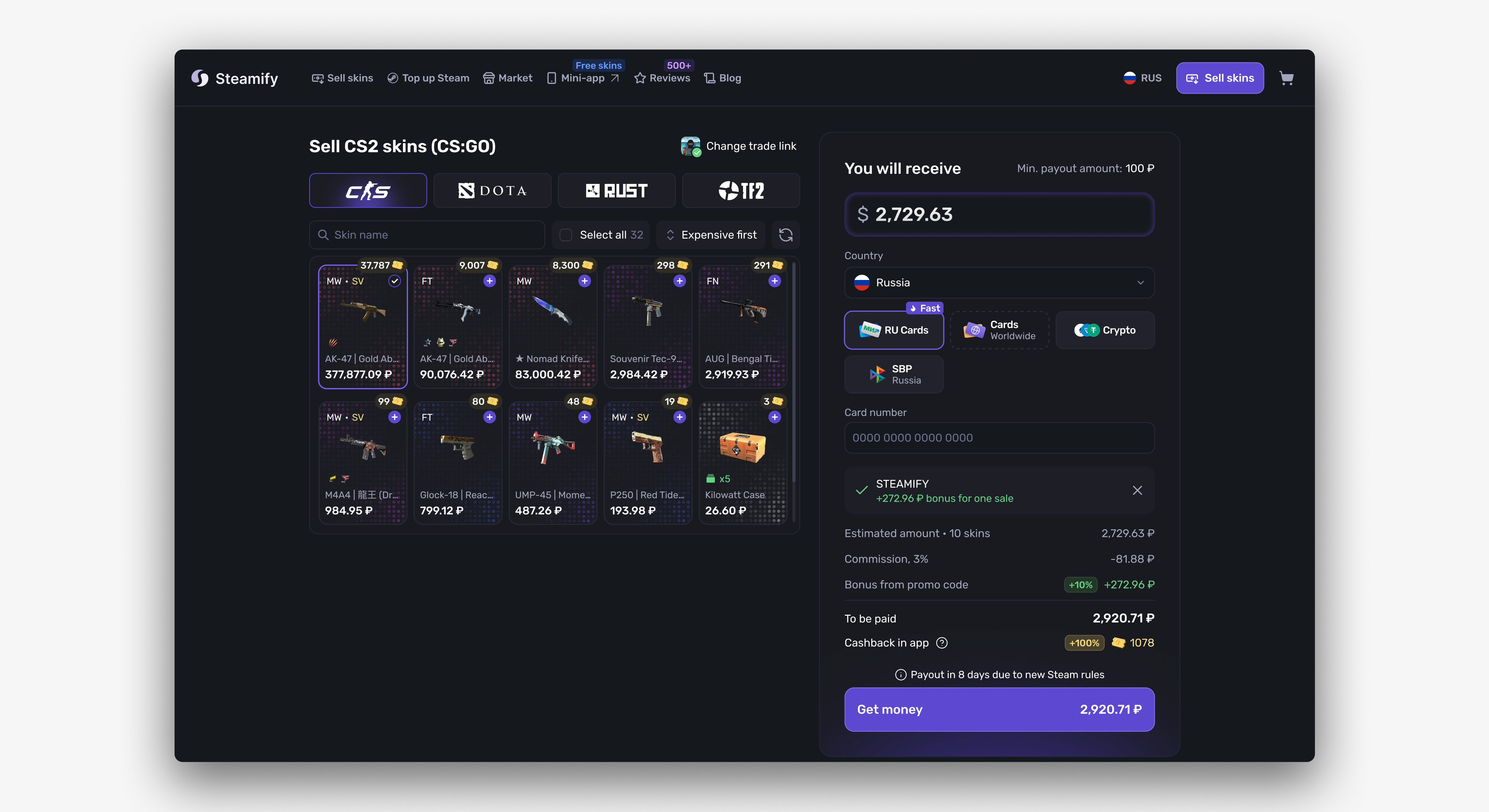
When the user selects the skins they want to sell, they must meet the minimum sale threshold. We indicate this in a progress bar at the bottom, which fills up as the user selects skins.
After the user selects the skins, the “Receive money” button becomes available. When clicking it, the user is taken to a simple but very important form for the business — selecting the country, choosing the payment method, and entering payment details.
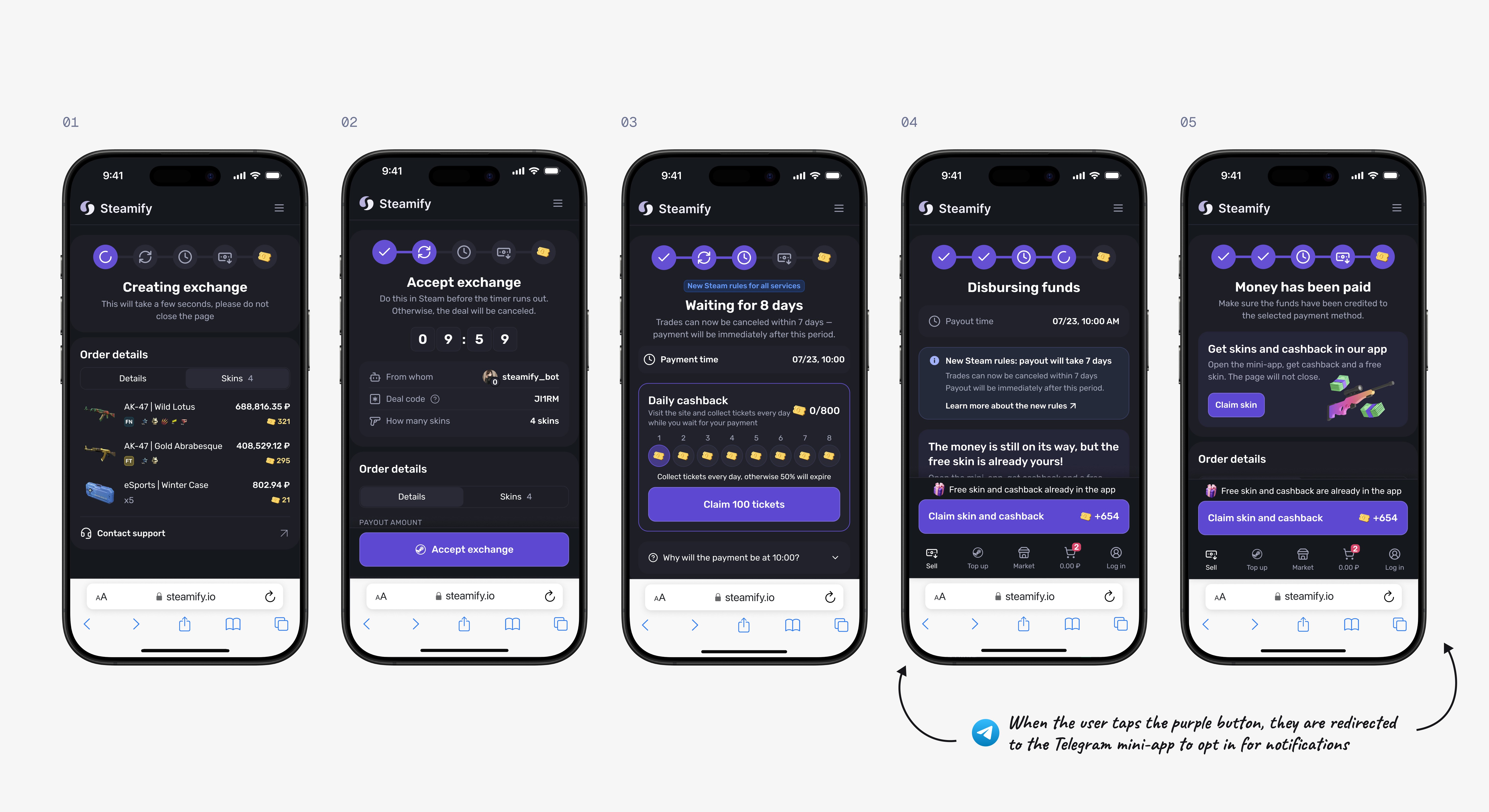
Core flow
Solutions
Built a mobile-first 5-step cashout flow to minimize drop-offs.
Integrated the most popular payment methods in Russia to reduce friction and increase transaction completion.
Introduced a cashback + Telegram mini-app for retention.
Turned Telegram integration into a retention loop through push notifications and
re-engagement mechanics.Implemented behavioral design elements (e.g., a progress bar tied to the minimum withdrawal threshold) to increase completion rates and transaction value.
Edge cases
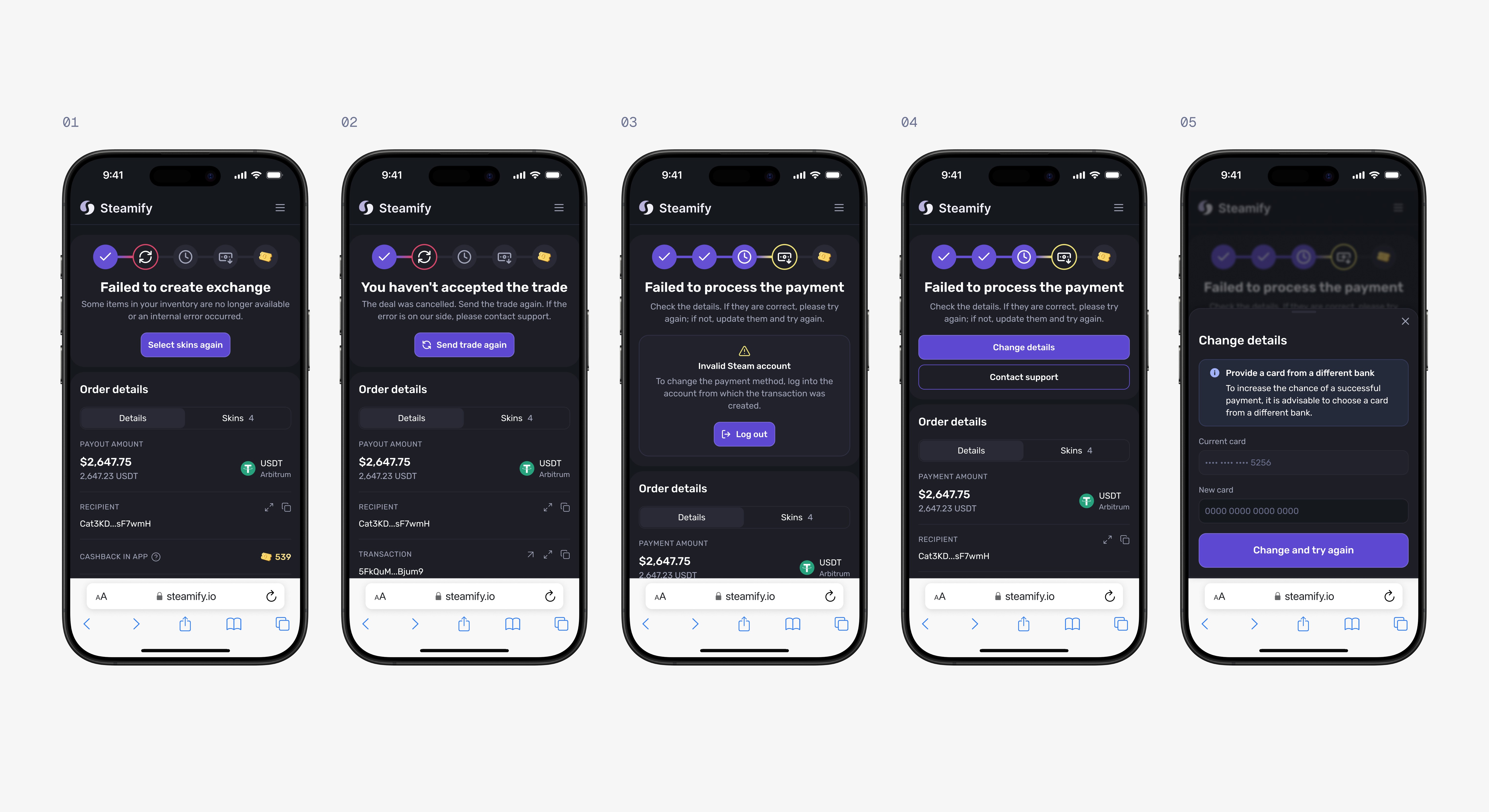
Providing clear and relevant feedback is essential when users make mistakes or encounter errors. Since the product involves transactions and external integrations, the flow cannot always be perfectly seamless. In such cases, the design must communicate issues clearly and guide users on how to resolve them.
Well-structured error states and system messages help maintain trust, reduce confusion, and ensure users can complete the process without unnecessary friction.
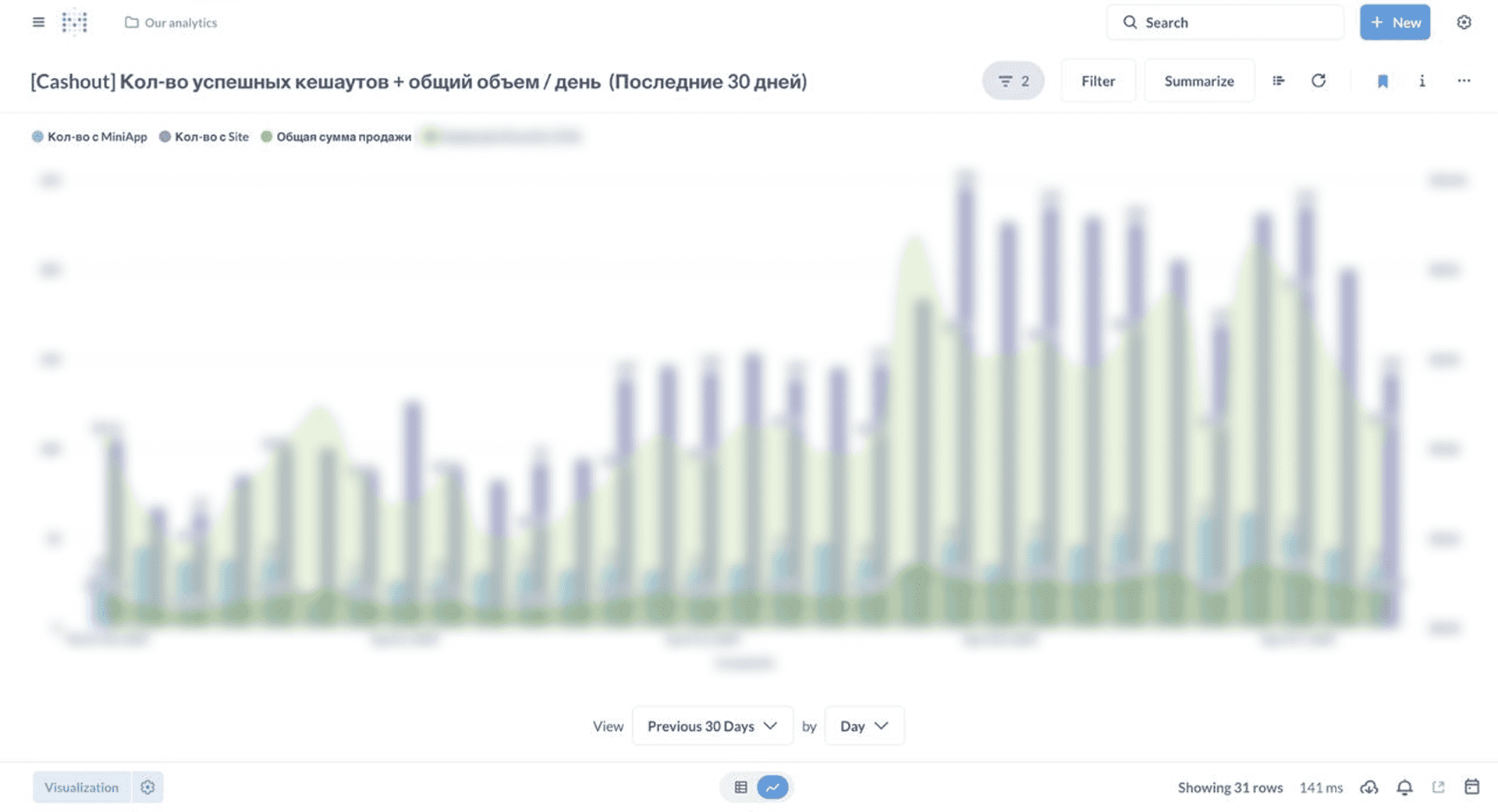
Metabase and Yandex Metrica for analytics
We tracked DAU & MAU, $$$ volume, the amount of cashouts from the web and the Telegram app, promo code activations, different types of CRs and other stuff.
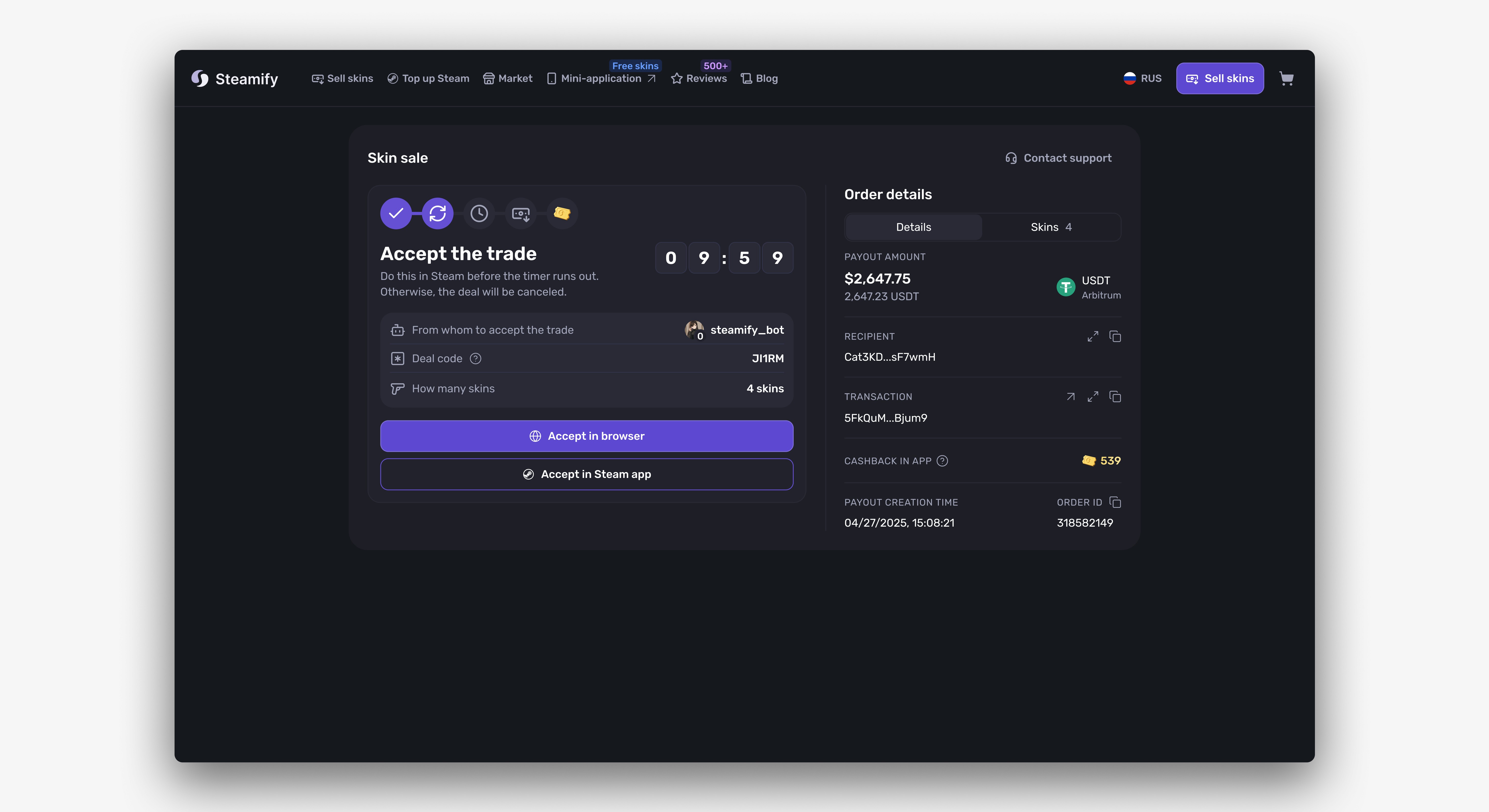
And desktop version…
Also check out…
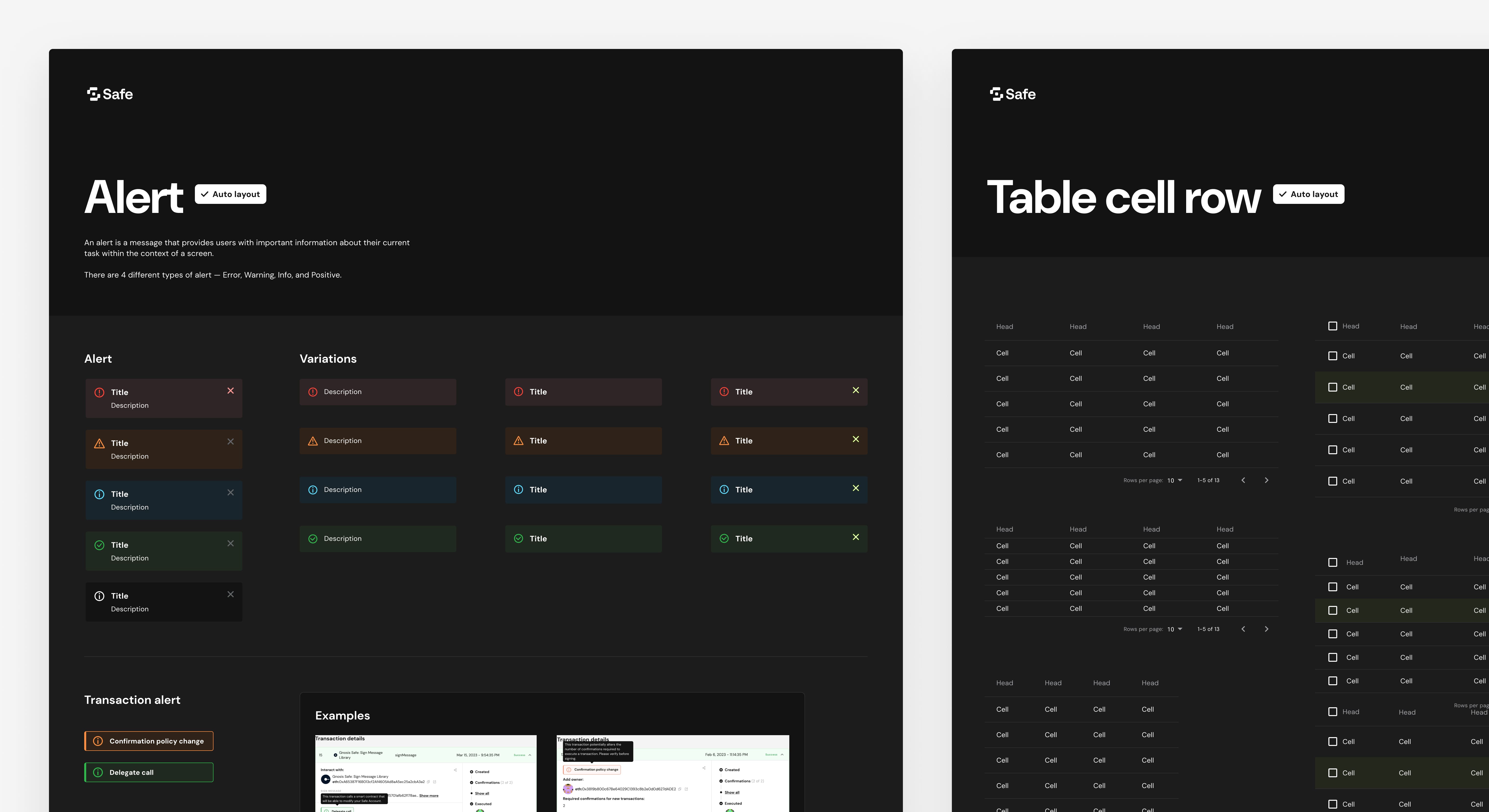
Safe{Wallet} Design System
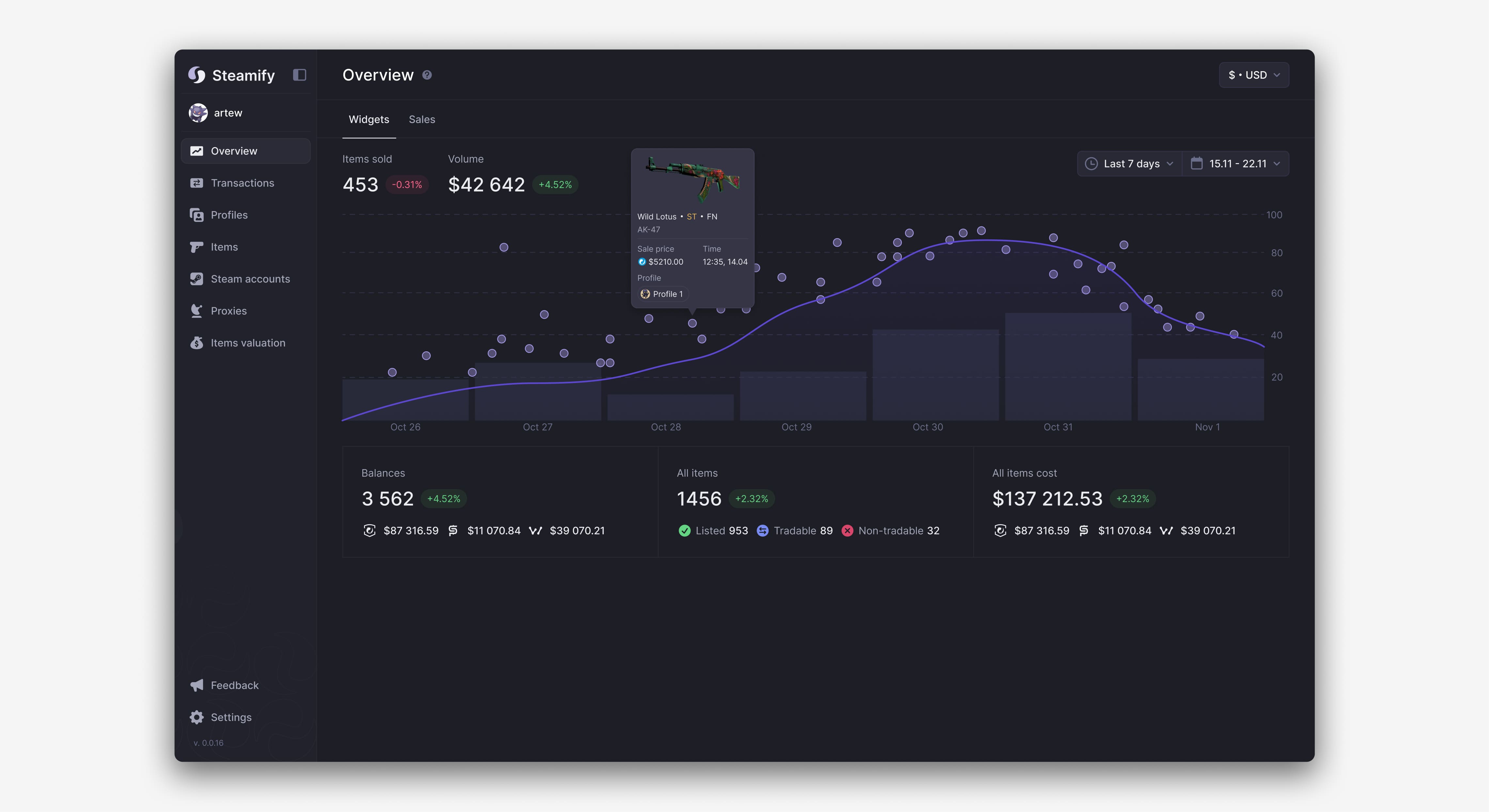
Steamify ― Trading Bot