Steamify ― Trading Bot
Idea and problem
There were only two bots available on the market.
Based on our analysis, the key issues we aim to address include inconvenient and non-transparent account management, an unintuitive and uncomfortable user interface, the lack of item-level analytics, and limited platform integrations for trading.
Additionally, competitors tend to be passive in engaging with users and respond slowly to requests for product improvements.
Process
While the CEO and I were in Thailand, we worked closely on the project on a daily basis. The pace felt similar to a hackathon — we made decisions quickly, iterated fast, and constantly refined the product together.
At times, discussions were intense and complex, and misunderstandings naturally arose in such a fast-moving environment. In situations where we had different perspectives, I took ownership of validating ideas through user experience principles, business impact, and feasibility.
This helped us evaluate options objectively and make aligned decisions. Ultimately, we always found common ground, clarified priorities, and moved forward with a shared vision.
How did we measure success?
We evaluate product success using two core metrics: users growth and user feedback.
Regarding market benchmarks, we only had visibility into the user numbers of our competitors:
• TradeLab ≈ 50 users
• TradeOn ≈ 40 users
As of March 3, 2024, we have already surpassed TradeOn, reaching 70 users in beta. We measure qualitative performance through direct chat feedback. User responses have been highly positive, with strong engagement and satisfaction signals.
Page
Overview
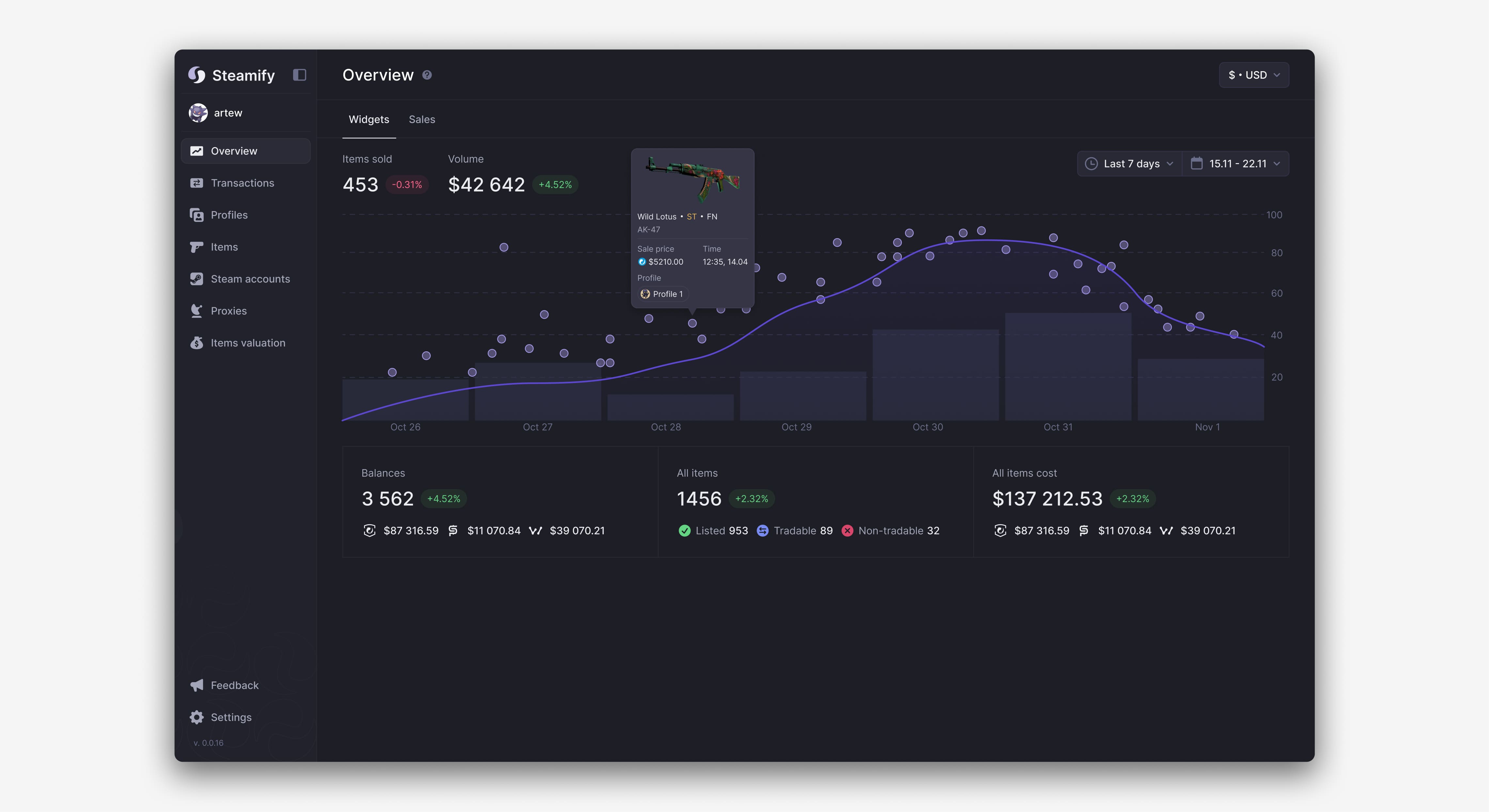
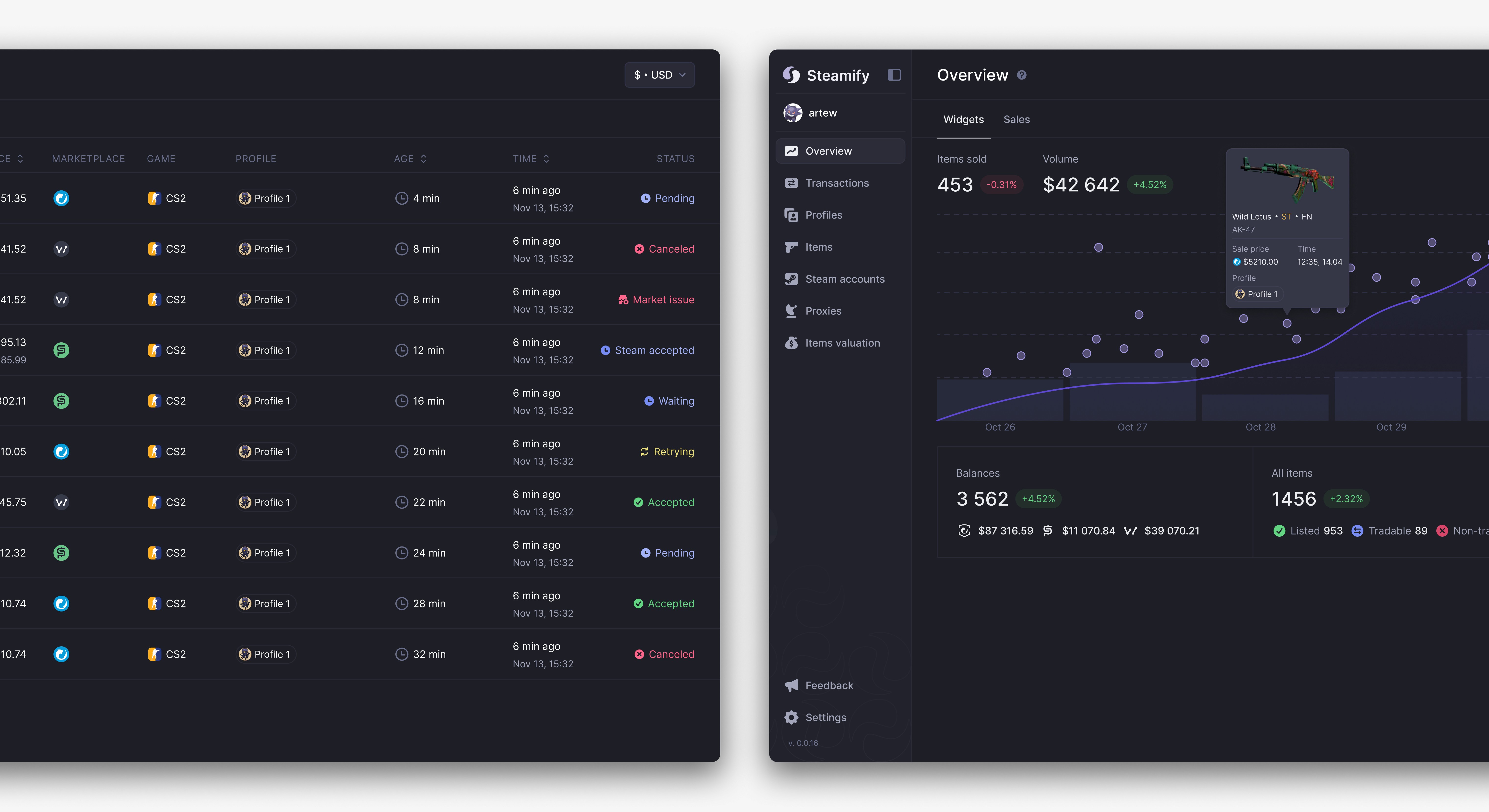
The Overview page consists of two main sections: Widgets and Sales.
The Widgets section functions as a centralized dashboard, displaying key performance indicators across all Steam accounts connected to Steamify. Users can filter data by selecting a specific time range via the integrated calendar, enabling more flexible performance analysis.
The Sales section provides a complete sales history. Each transaction is assigned one of four statuses: Waiting, Retry, In Process, or Accepted, allowing users to clearly track the progress of their sales.
All data updates in real time via WebSocket integration, ensuring immediate status changes and a responsive user experience.
Page
Profiles
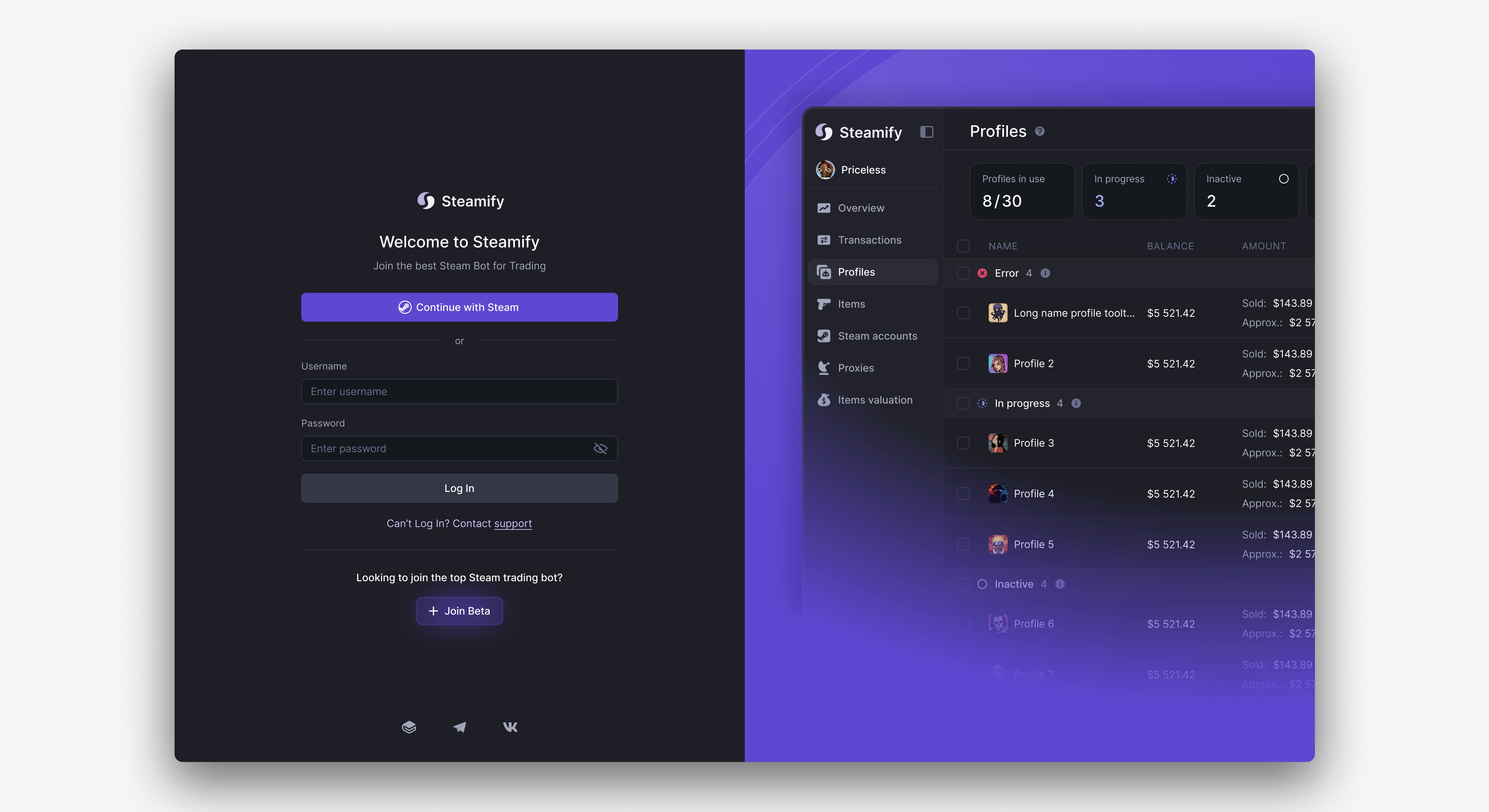
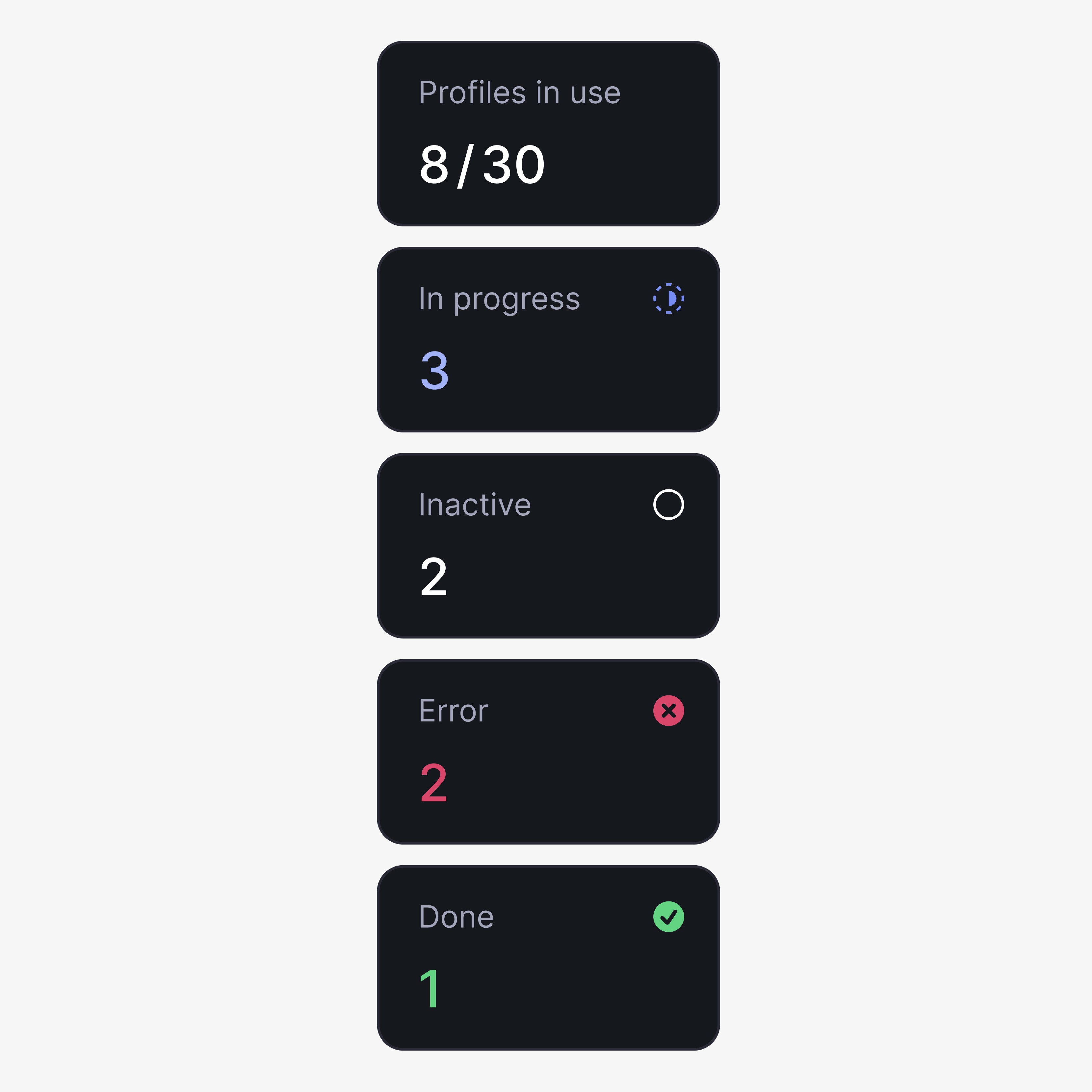
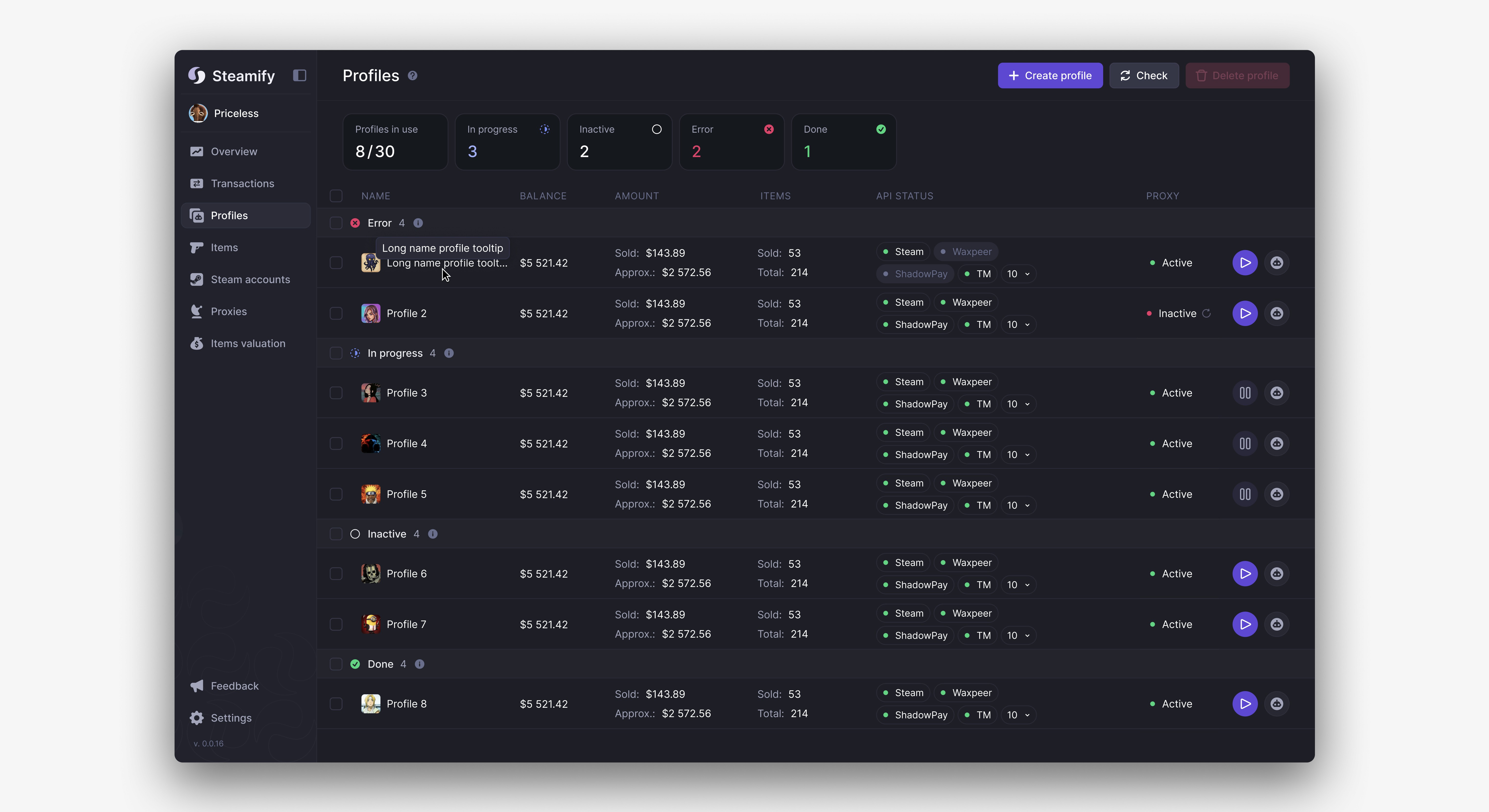
Profiles represent the bots responsible for selling users’ items. Each profile can have one of four statuses: Error, In Progress, Inactive or Done.
Each profile displays key operational data, including current balance, total revenue from sales, estimated inventory value, total number of items, as well as API key and proxy status — ensuring transparency and control over the selling process.
Page
Prices
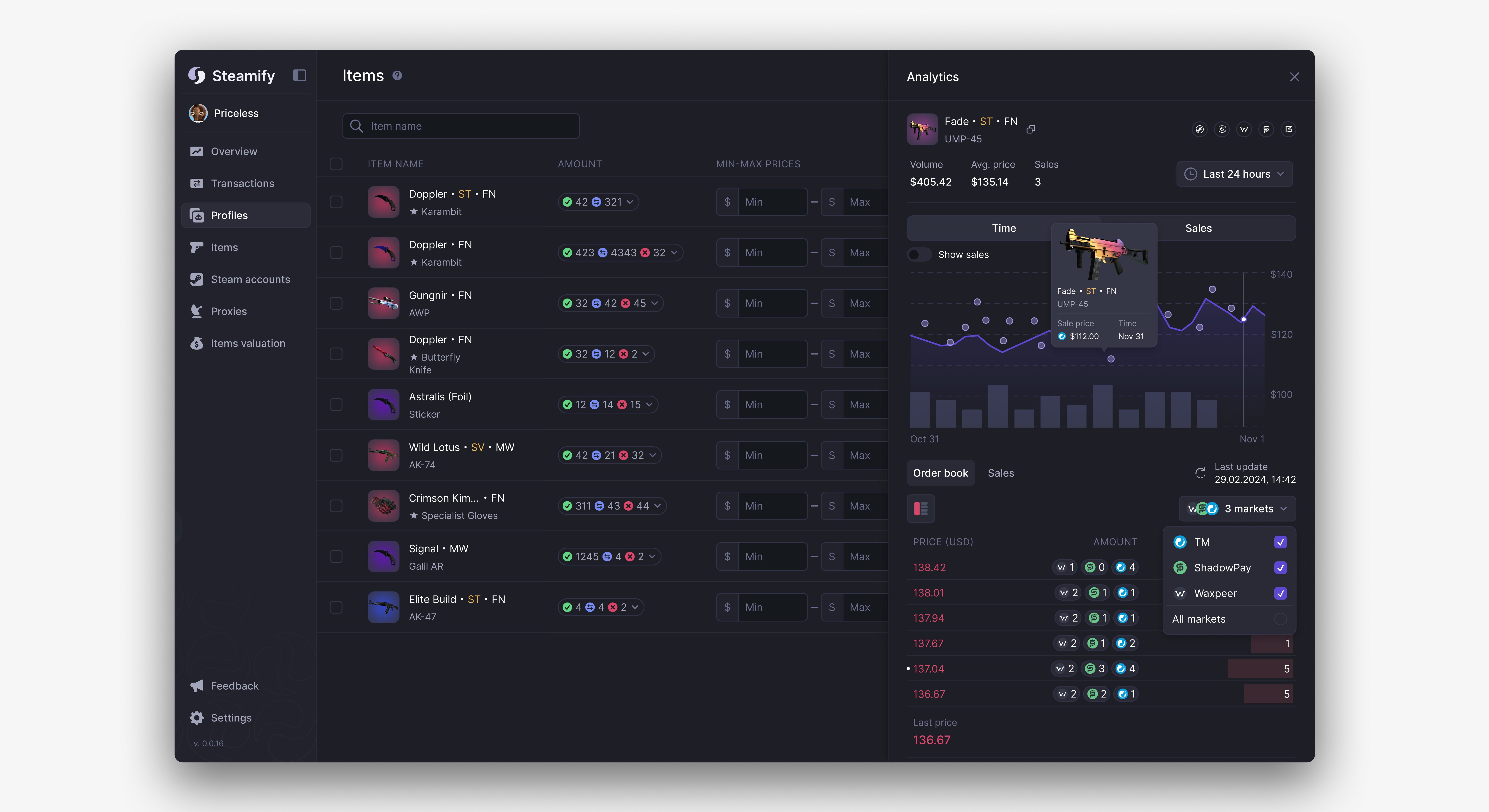
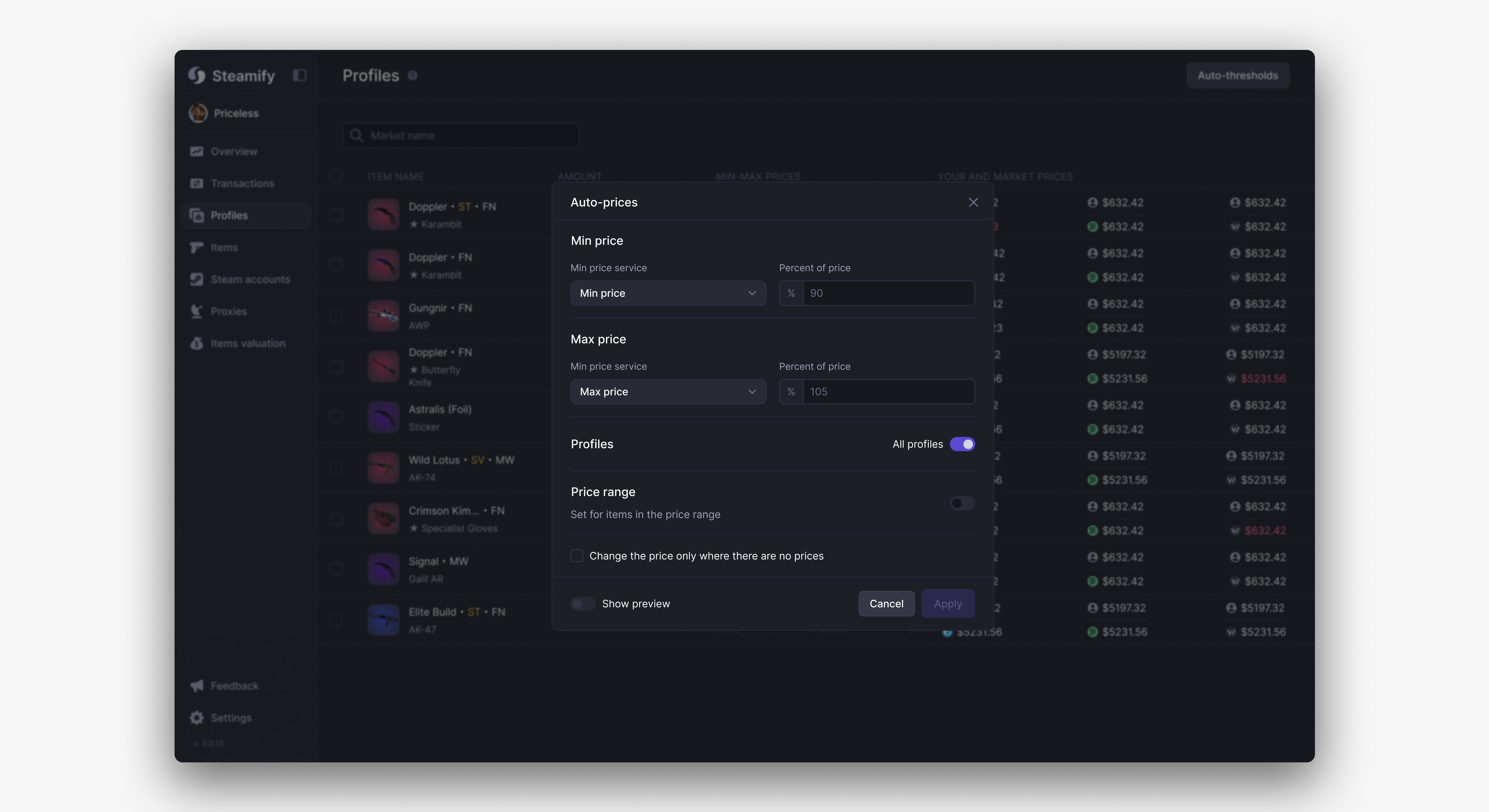
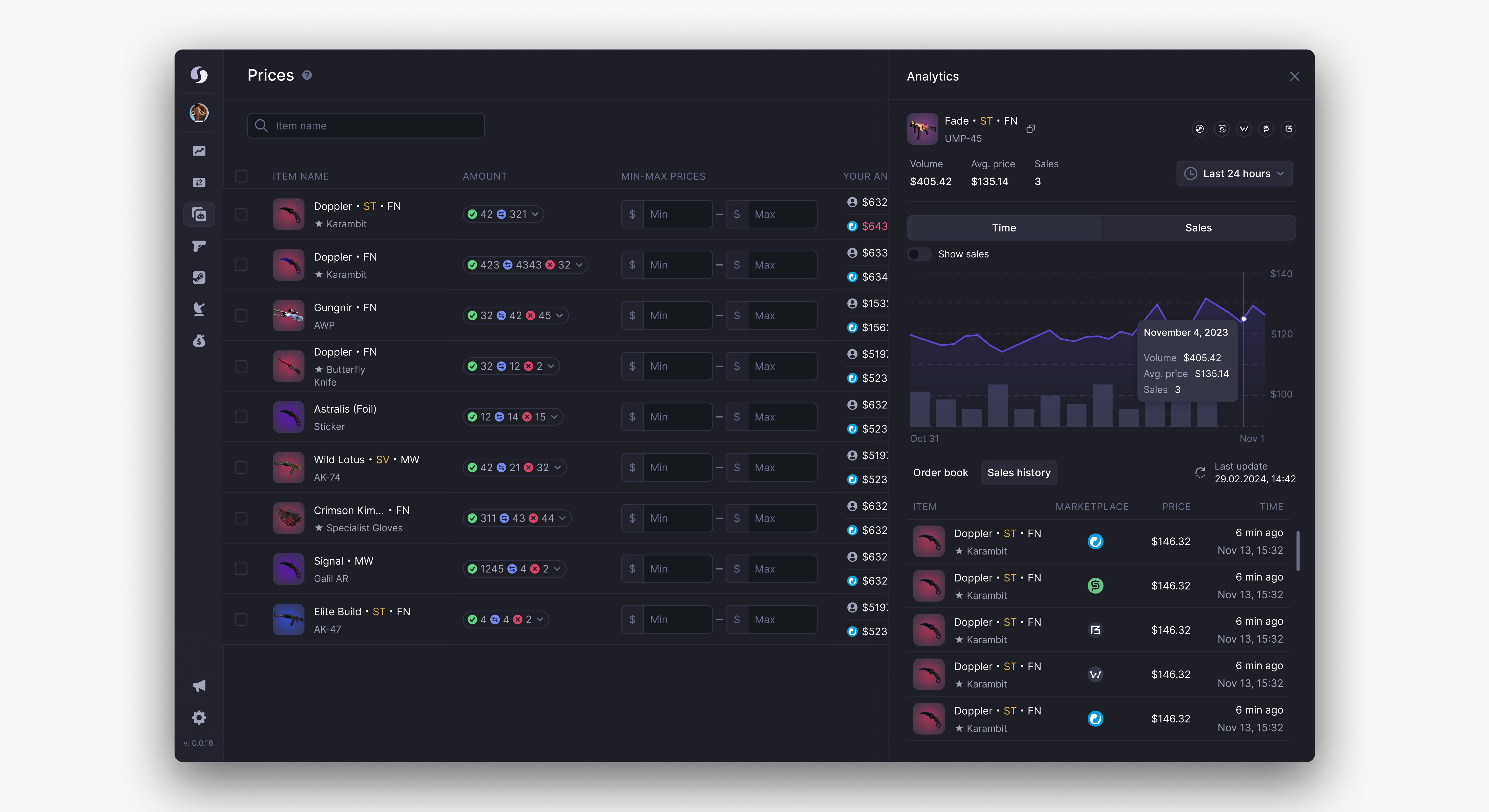
On this page, users define minimum and maximum pricing thresholds for their items. Each item’s uniqueness is visually emphasized through background color coding, reflecting rarity standards familiar to Steam traders and improving quick recognition.
One of our key features is a contextual drawer that includes a sales chart and order book, enabling users to make data-driven pricing decisions.
To address cases where users own multiple similar items that differ in stickers, wear level, or other attributes affecting value, we introduced a structured subtable. This view provides detailed item-level information, allowing for more precise pricing and better inventory management.
Outcomes and learnings
Working in a fast-paced, hackathon-like environment taught me to prioritize momentum over perfection — shipping fast, validating early, and continuously improving based on feedback rather than overpolishing initial solutions.
I enhanced my communication within the team by clearly articulating and confidently advocating for design decisions, ensuring they were aligned with user needs, business objectives, and technical feasibility.
I deepened my frontend knowledge, which improved collaboration with engineers and allowed me to communicate in the same technical language. This enabled me to contribute to decisions around UI libraries and component architecture — for example, integrating the Sonner library to enhance system feedback and interaction clarity.
Also check out…
Playdex ― NFT Rental Marketplace
Steamify ― Skins Cashout